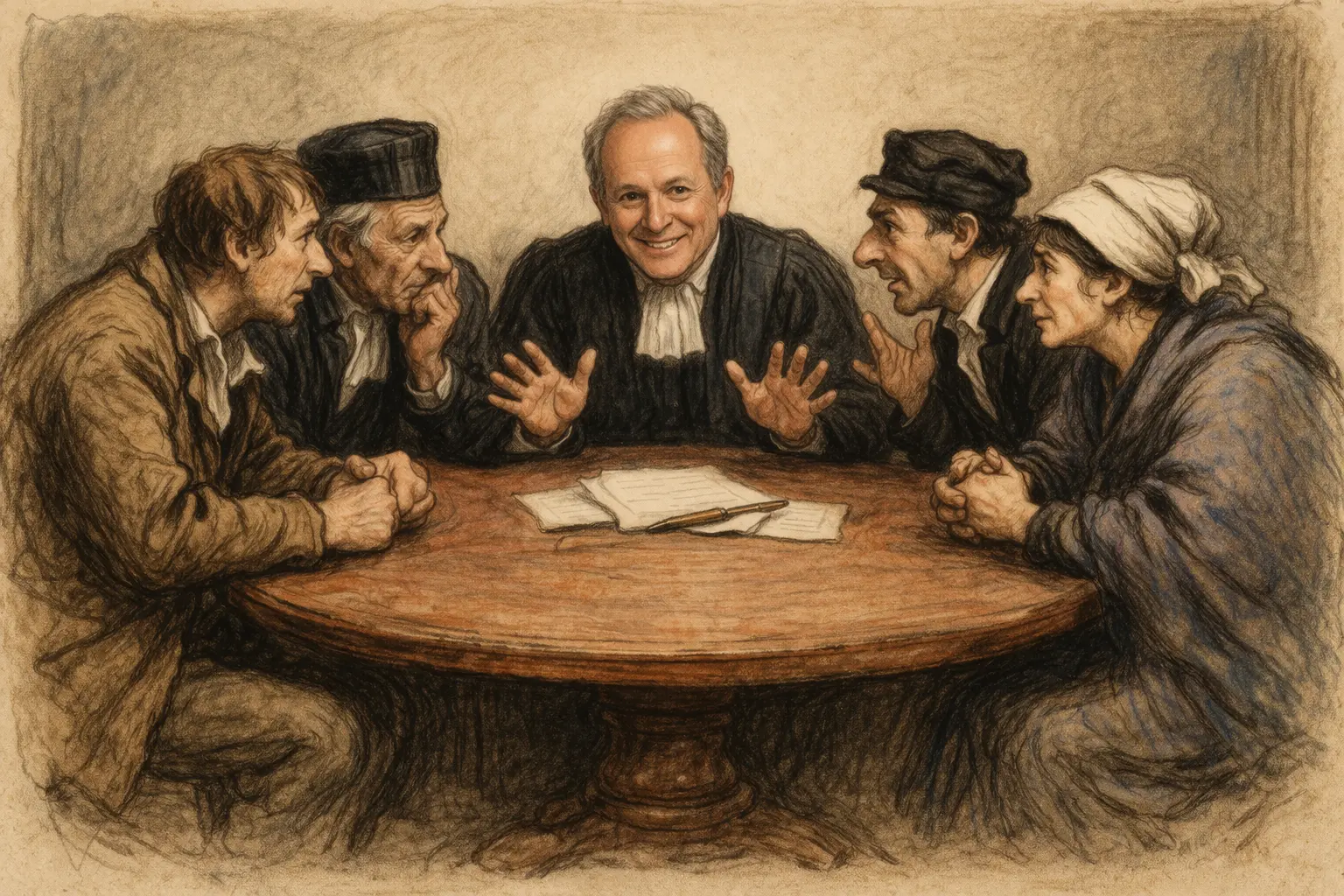
Vacatur: Arbitrator Who Questioned Defendant’s Need For Interpreter Created Reasonable Impression Of Possible Bias
Arbitrator Bias Furnishes A Proper Basis To Vacate An Award.
A canceled real estate sale resulted in an arbitration award adverse to the seller. Seller Pham appealed, on the grounds that the arbitrator was biased. While the grounds for vacating an arbitration award are exceedingly narrow, bias can constitute misconduct, and thus serve as a basis for vacating the award. Here, the arbitrator, in explaining the basis for her award, questioned the credibility of defendant Pham, because Pham used an interpreter. The arbitrator believed that Pham, who had been in the country for many years, and who had participated in sophisticated business deals before, did not need an interpreter and was only using an interpreter to create the impression she was unsophisticated.
The Court of Appeal disagreed. Writing for the court, Justice Dato pointed out that Pham had used an interpreter during a negotiation with plaintiff; that one who has been in the country a long time may still have imperfect language skills; and that one who has language comprehension issues may nevertheless participate in sophisticated business transactions. The arbitration award was vacated. FCM Investments, LLC v. Grove Pham, LLC, et al., No. D080801 (4/1 10/17/23) (Dato, O'Rourke, Do). Questioning Pham's credibility because she used an interpreter created a reasonable impression of possible arbitrator bias.
COMMENTS. This case is unusual factually and procedurally.
First, we have blogged about a number of cases in which parties did not speak English as a first language, and this weighed in a court's assessment of whether an untranslated arbitration agreement written was unconscionable. In the instant case, language comprehension is a factor, but only because the use of an interpreter impacted the arbitrator's assessment of witness credibility. That's unusual. It may raise a question about how often the use of an interpreter has some impact on the arbitrator's evaluation of a witness. Because the arbitrator never mentions it, there is no way to know. Here, if the arbitrator had said nothing about the use of the interpreter, her award might well have stood intact.
Second, the question of bias usually arises because the arbitrator fails to make a timely disclosure of qualifications. But that's not what happened here. In fact, the issue of bias was not raised before the trial court, and thus would usually be forfeited on appeal. However, Justice Dato explained that the issue of bias could be decided as a matter of law because it was apparent on the record, and the Court of Appeal could reach the issue because it involved the integrity of the legal process.
Legislation, Stays: Stays Of Appeals Of Orders Denying Motions To Compel Arbitration Are Now Discretionary
Governor Newsom Signed SB 365 On October 10, So Now There Are No Automatic Stays Pending Appeal When Trial Court Denies Motion To Compel Arbitration.
Ordinarily, "the perfecting of an appeal stays proceedings in the trial court upon the judgment or order appealed from or upon the matters embraced therein or affected thereby . . ." Therefore, California courts have stayed proceedings in trial courts when the order appealed from is an order denying a motion to compel arbitration. The stay protects the jurisdiction of the arbitrator if the court of appeal ultimately decides that the case should be arbitrated.
Prior to the United States Supreme Court Coinbase case, which we blogged about on 7/3/23, federal and California law were out of synch. Federal law provided that litigation continued in the district court pending an interlocutory appeal, but a party could try to convince the district court (and if necessary, the circuit court) to exercise discretion and stay proceedings pending appeal. Coinbase changed the law, making a stay automatic when a party sought review of the order denying its petition to compel arbitration. So for a fleeting moment, California law and federal law aligned. Now the stay pending appeal of an order denying arbitration was automatic in both state and federal court.
Along came the California Legislature, which enacted SB 365. The Legislative Counsel's Digest explains: "Existing law authorizes a party to appeal, among other things, an order dismissing or denying a petition to compel arbitration. Existing law generally stays proceedings in the trial court on the judgment or order appealed from when the appeal is perfected, subject to specified exceptions. This bill would provide that, notwithstanding the general rule described above, trial court proceedings would not be automatically stayed during the pendency of an appeal of an order dismissing or denying a petition to compel arbitration." (italics added). Once again, California law and federal law are out of joint. The stay pending appellate review of the order denying a petition to compel arbitration is automatic in federal court, but discretionary in state court, much as a stay in federal court pending appeal of an interlocutory order had once been discretionary.
Consider the political perspective. The conservative United States Supreme Court is very friendly to mandatory arbitration. In disputes brought by employees or consumers, it will usually be the defendant company that seeks to arbitrate. If defendant's motion to compel arbitration is denied, the employer will want to avoid unnecessarily litigating in district court and the court of appeals, and will want to preserve the jurisdiction of the arbitrator. It makes sense, therefore, that the SCOTUS majority would stray from the general rule that stays pending appeal are discretionary and instead make them automatic in the arbitration example. We note that Justice Katanji Brown Jackson filed a dissent in Coinbase, in which Justices Sotomayor and Kagan joined in full, supporting our Legal Realist view that there is a political slant to the issues. (Justice Thomas, sometimes an outlier in arbitration cases, partially joined the dissenters).
In our Blue state, the California courts, Democratic legislature, and labor unions are less supportive of mandatory arbitration than is SCOTUS, or at least, than is the conservative SCOTUS majority. It is therefore unsurprising that Governor Newsom signed SB 365.
Does the new California rule making the stay discretionary really help employees and consumers? That remains to be seen. Because the stay is now discretionary, it may not make much difference — superior courts can still grant a stay pending an appeal. However, if the courts take advantage of the new rule to deny a stay, it could add a layer of complexity, expense, and delay to a case. This could turn out to be an example of "be careful what you ask for." The optics, however, certainly favor employees and consumers. At least on paper, they are no longer subject to an automatic stay when a corporation pursues arbitration in a court of appeal.
For an objective and elegant discussion of the "do-si-do re stays" see appellate specialist Ben Shatz's post in the Southern California Appellate News. Ben even included a cute sketch of "the dance".
Finally, I asked arbitrator and mediator Paul Dubow, his opinion as to whether SB 365 will raise preemption issues. As always, Paul provided a thoughtful in-depth response. With his permission, I repeat it in full:

Prompt Payment: Along With Other Courts, 1st District Div. 3 Strictly Interprets Statutory Prompt Payment Requirement For Employer Wanting To Arbitrate
The Payment Must Be Received By The Arbitrator Within 30 Days Of When It Was Due.
September 1, 20221 was the “due date” for the employer in a sexual harassment dispute to pay arbitration fees and costs to the arbitrator, making payment due October 3. Cal. Code of Civ. Proc., § 1281.98(a)(1). The employer mailed the check on September 30, and it was received on October 5, two days after the 30 day grace period expired. That was good enough for the superior order, which issued an order compelling arbitration, but not good enough for the Court of Appeal. "We do not find that the proverbial check in the mail constitutes payment and agree with petitioner that real parties’ payment, received more than 30 days after the due date established by the arbitrator, was untimely." Jane Doe v. The Superior Court of the City and County of San Francisco, Respondent, and Na Hoku, Inc., et al, Real Parties in Interest, A167105 (1/3 9/8/23) (Petrou, Tucker, Fujisaki).
What can one say? Almost doesn't count? Close but no cigar? How about: close only counts in horseshoes.
We have now posted a number of times that California courts have been real sticklers about strictly interpreting the 30 day requirement in § 1281.98. See posts of 7/10/23, 8/1/22, 12/11/22, 1/2/23, 3/21/23. Employers who do not comply with the requirement risk ending up outside arbitration and inside court.
Celebrities: Senator Dianne Feinstein’s Family Dispute Goes To Mediation
The Judge says, "I'm looking for a global outcome if we can get it."
It is painful to watch Senator Dianne Feinstein in the dusk of her long and distinguished career of public service, mired in a family lawsuit in which she is represented by her daughter former San Francisco judge Katherine Feinstein, acting as her trustee. Earlier in August, when Senator Feinstein's cognitive abilities were being questioned, CBS News reported that Senator Feinstein had turned over power of attorney to her daughter.
As reported by the NYT on 9/11/23, the dispute pits the three children of Senator Feinstein's late husband, investor Richard C. Blum, against Senator Feinstein and Katherine Feinstein. At issue are the sale of a vacation home in Stinson Beach, the use of the assets of Blum's estate for payment of Senator Feinstein's medical expenses, and a request to appoint Katherine Feinstein as a trustee of the Blum estate.
The trustees of Blum's estate claim that Senator Feinstein has "$1 million in annual income, a quarterly $125,000 disbursement from another of her late husband’s trusts, and a net worth of more than $50 million." Senator Feinstein's trustee claims that Blum's trust is being manipulated to maximize his daughters' inheritance. Whatever the outcome, it appears that Senator Feinstein will not be left destitute.
With the consent of the parties, the dispute will be mediated. Mediation is definitely the best way to resolve a family dispute such as this. What high profile public person — indeed, what person — would want to air family acrimony before the wide public? Mediation offers the parties the opportunity to resolve their dispute globally and in private. Hopefully they will not squander that opportunity.
Automobiles, Nonsignatories: Hyundai Is Unable To Piggback Onto Dealership’s Arbitration Agreement
California Court of Appeal, 3rd District, Disagrees With California Court of Appeal, 3rd District.
A Third District California Court of Appeal panel composed of Justices Renner, Earl, and Hull, disagrees with an earlier Third District panel composed of Justices Hoch, Robie, and Murray. The issue is whether an automobile manufacturer can rely on an arbitration agreement between a dealership and a customer to compel the customer to arbitrate a breach of warranty claim with the nonsignatory automobile manufacturer. The earlier case, Dina C. Felisilda et al., v. FCA US LLC, 53 Cal.App.5th 486 (2020), held that the manufacturer could rely, because the customer had to rely on the contract with the dealer to sue the manufacturer. We posted about the Felisilda case on 8/29/20.
In light of developing case law, Justice Renner, writing for the court, disagrees with Felisilda. The customer's claim that the manufacturer breached its warranty does not rely on the customer's contract with the dealership. The manufacturer's warranty is not part of the dealership contract. Mark Kielar v. Superior Ct. of Placer County (Hyundai Motor America, Real Party in Interest), C096773 (3rd Dist. 8/16/23).
PAGA: California Courts Will Now Hold PAGA Plaintiffs Arbitrating Their Claims Have Standing To Litigate Representative Claims Of Others
The Issue Was Resolved By The California Supreme Court In July 2023, And Lower Courts Are In-Step.
Earlier this year the California Supreme Court addressed the following question: "[W]hether an aggrieved employee who has been compelled to arbitrate claims under PAGA that are 'premised on Labor Code violations actually sustained by' the plaintiff . . . maintains statutory standing to pursue 'PAGA claims arising out of events involving other employees' . . . in court." The Court held that the answer is "yes". Adolph v. Uber Technologies, Inc., S274671 (Cal. Sup. Ct. 7/17/23) (Liu; Guerrero, Corrigan, Kruger, Groban, Jenkins, Evans).
This conclusion is contrary to the explanation provided by Justice Samuel Alito writing for the majority in Viking River Cruises, Inc. v. Moriana. Alito opined that once the individual PAGA plaintiff was compelled to arbitrate individual claims, the plaintiff lacked standing to litigate representative PAGA claims. However, Justice Liu explained that the California Supreme Court, in accord with Justice Sonia Sotomayor's concurrence in Viking River Cruises, was the final interpreter of a California statute. He concluded that under the California PAGA statutory framework, the individual PAGA plaintiff had standing to bring representative claims.
The latest California case recognizing that Adolph has resolved the representative standing issue for now is Barrera v. Apple American Group LLC, A165445 (1/2 8/31/23).
In a Daily Journal article earlier this year I presented the disagreement between the California courts and the US Supreme Court regarding standing of an individual PAGA plaintiff to pursue representative claims. Though I resisted the temptation to guess how the California Supreme Court would rule on the issue, I am not in the least bit surprised by the result.