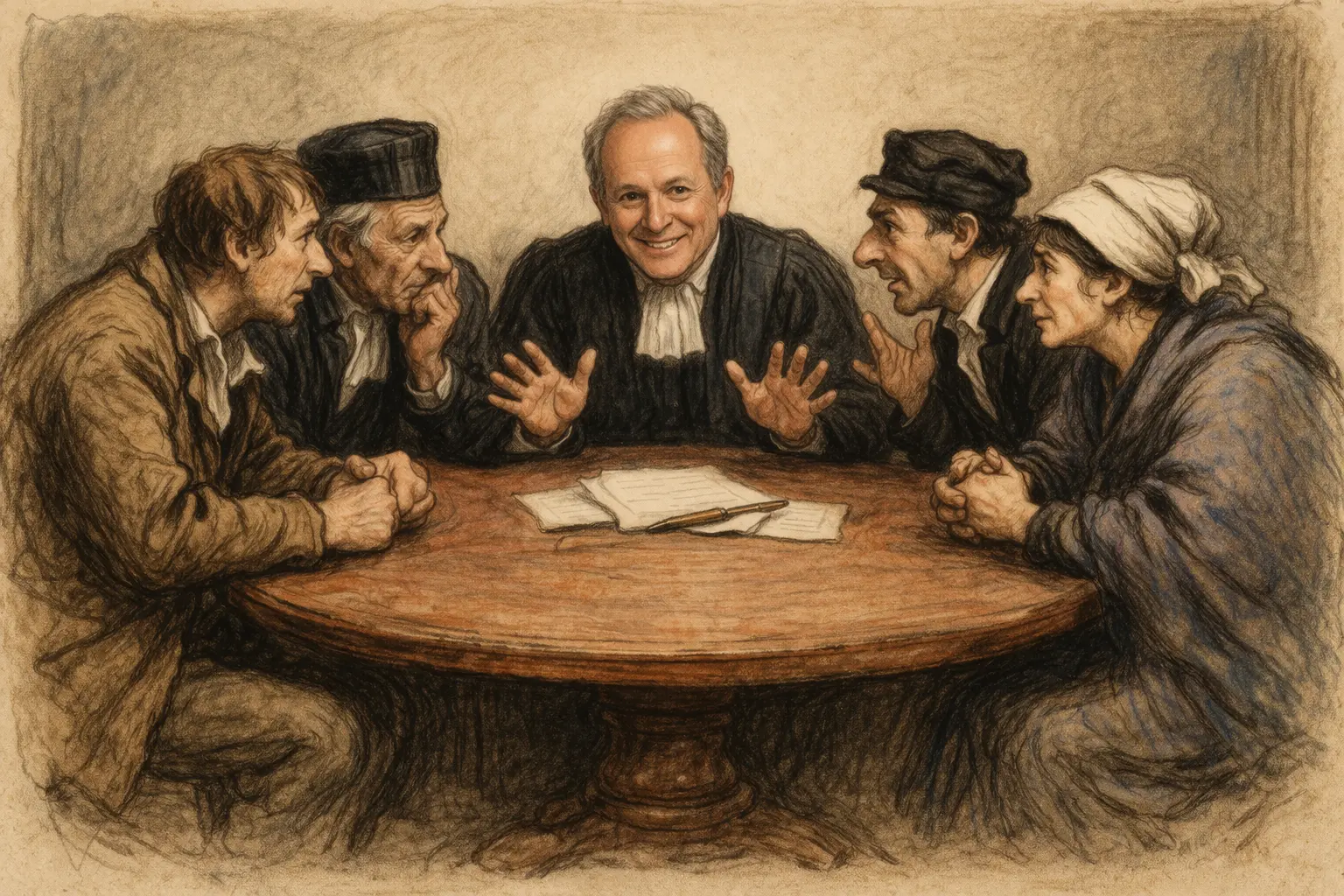
Videoconferencing: The Effective Use of Remote ADR — Tips From The Pros
Remote ADR Is An Effective Way To Resolve Disputes At A Time When COVID-19 Has Shuttered Courts And Delayed Legal Procedures.
The COVID-19 Task Force of the Orange County, California Bar and the ADR Section of the Bar jointly hosted a Zoom webinar on August 14, 2020 about the effective use of remote mediation. The panel discussion included the Hon. David Chaffee (ret.), the Hon. Franz Miller (ret.), and Jill Sperber, mediator/arbitrators who come from three major ADR providers: ADR Services, JAMS, and Judicate West. Our panel moderator was Darrell White, a director of the OC Bar, and a business litigator at Kimura, London & White LLP. As chair of the ADR section, I introduced the topic and our panel. Remote ADR continues to be a hot topic in California, five months after we began “sheltering in place”, and the webinar attracted over 150 participants.
Our panelists explained the obvious need for videoconferencing triggered by the public health crisis:
- Cases requiring a civil trial in Orange County are very unlikely to get to trial before 2021.
- Getting to trial may require a statutory preference (e.g. bumping up against the five year rule) or else stipulating to an expedited one-day jury trial.
- Juror response rates, once estimated at 80%, may now be around 40%.
- Older persons are likely to be more reluctant to serve as jurors.
- Courthouse logistics are inhospitable, with limitations on the number of people who can ride in an elevator, and limitations on seating in courtrooms and jury rooms.
- The case inventory of individual judges has greatly increased. When the COVID-19 crisis subsides, inventories will increase, as cases such as unlawful detainers and foreclosures move forward.
Those new pressures placed on a judicial system already suffering from a lack of resources mean that, for many lawyers and litigants, remote ADR will be the best and only way to resolve disputes.
Here are some takeaways:
While generally preferring face-to-face meetings, the panelists have been able to make effective use of videoconferencing to resolve cases.
- Though not the exclusive platform, Zoom is the preferred platform of the ADR providers, attorneys, and clients.
- For many parties, remote mediation offers the comfort of their surroundings, and costs and time efficiencies, as there is no need for travel (or a parking fee). It is especially helpful for bringing participants to the table from out of state.
- The added comfort, and cost and time saving of remote ADR may, in some cases, make a case harder to settle, because the ease of videoconferencing may mean that parties and attorneys invest less time, money, and effort into the process than would be the case in a face-to-face meeting.
- Physical distance can be helpful in highly emotional cases, and therefore videoconferencing may be well-suited for employment, sexual harassment, and partnership disputes.
- Always have a backup communication plan in case the videoconferencing platform fails.
- Test the platform with attorneys before videoconferencing.
- While videoconferencing can result in a signed settlement agreement, using services such as DocuSign, often the outcome will be agreed-to deal points, followed up with a notice of settlement filed by the attorneys, and the court’s order to show cause why the matter should not be dismissed after a reasonable amount of time to finalize a settlement.
- Mediators can treat videoconference mediations like ordinary mediations, using the videoconference platform to hold joint sessions and effectively caucus in breakout rooms. And parties and attorneys should treat videoconference mediations like ordinary mediations, taking them seriously, and being thoroughly prepared.
Bottom line: remote ADR is a good alternative to face-to-face meetings. Just as CourtCall initially faced resistance but came to be widely accepted, we expect that remote ADR will grow in acceptance.
Arbitration, PAGA, Delegation: Employees Who Entered Into Agreement To Arbitrate Before They Brought PAGA Representative Action Could Not Bind State To Arbitrate
How The Issue Presented Was Framed Made All The Difference.

View of a frame-maker's workshop circa 1900. Wikipedia article "Picture frame."
As putative members of the so-called Guerra class action, Bautista and Garcia signed settlement agreements containing an arbitration clause and waiver of representative actions in 2014. The Guerra action did not include a PAGA claim. In 2018, Bautista and Garcia brought PAGA representative actions against their employer. The trial judge denied the employer's motion to compel arbitration, and it appealed. Bautista v. Fantasy Activewear, Inc., et al, B297070 (2/1 7/24/20) (Chaney, Rothschild, Bendix).
Under Iskanian v. CLS Transportation Los Angeles, LLC ,59 Cal.4th 348 (2014), PAGA claims are representative actions brought by an employee on behalf of the state, akin to qui tam actions. Because the state (here, the Labor and Workforce Development Agency) is the real party in interest, but not a signatory to the arbitration agreement, PAGA claims generally are not arbitrated.
Here, the defendant/appellant employer argued the 2014 settlement agreements incorporated JAMS rules, and the JAMS rules delegated the issue of arbitrability to the arbitrator. In other words, the issue of arbitrability was not for the court to decide.
Disagreeing with the employer's argument, the Court of Appeal affirmed the trial court's order denying the motion to arbitrate. The Court framed the issue: "The question here is not whether a PAGA representative action may ever be arbitrable or who is empowered in any particular circumstance to determine arbitrability, but rather whether an arbitration agreement binds a real party in interest that never agreed to arbitrate." And when Bautista and Garcia entered into settlement agreements with arbitration clauses in 2014, they were not acting as agents of the state, nor was the state a signatory. So Bautista and Garcia could not be bound to arbitrate as proxies of the state when they brought PAGA claims in 2018.
COMMENT: Deciding the issue of arbitrability can be delegated to the arbitrator. The teaching of this case and other California cases is "that arbitration agreements entered into before a plaintiff has been deputized for purposes of a PAGA representative action is [sic] not enforceable for purposes of the PAGA representative action." In other words, the existence of an arbitration agreement precedes even a determination of who decides arbitrability.
Arbitration, Class, Waiver, Construction: Third District Holds Plaintiff Only Waived Right To Bring Class Action Lawsuit, Not Class Arbitration
Court Of Appeal Reverses Order Denying Motion To Compel Arbitration Of Class Claim.
In an employment dispute, the trial court denied plaintiff' Garner's ability to pursue class action claims in arbitration, relying on "language in the arbitration agreement stating that Garner waived his right to participate in class action lawsuits." Chris Garner v. Inter-State Oil Company, C088374 (3rd Dist. 7/23/20) (Mauro, Robie, Duarte). Garner appealed.
One clause in the arbitration expressly provided for arbitration of class actions, i.e., "any and all claims arising out of or related to your employment that could be filed ina a court of law, including . . . class action . . . shall be submitted to final and binding arbitration . . ."
Therefore, respondent Inter-State Oil Company argued a second clause — the one relied on by the trial court — resulted in a waiver of the right to arbitrate a class action, because it provided that the employee "waived his right to 'participation in a civil class action lawsuit . . .'"
The Court of Appeal harmonized the two provisions in favor of the employee, pointing out the obvious: "Lawsuits generally refer to court actions." Therefore, the parties had agreed that the employee could arbitrate class actions, and also agreed that the employee could not litigate class action lawsuits in court.
The Court of Appeal concluded that both the employee's individual and class claims required arbitration.
Arbitration, Costs: Cost-Splitting Provision Did Not Prevent Appellant From Recovering Costs During And After Arbitration
Plaintiff's Request For Costs Was Made In Court After Plaintiff Beat Her Section 998 Offer During Arbitration.
Plaintiff/Appellant Helene Storm prevailed in arbitration over an uninsured motorist claim against an insurance company. Afterwards, she petitioned the trial court to confirm the award in her favor, and to award arbitration and post-arbitration costs as a prevailing party under sections 998 and 1293.2, because she did better than her 998 settlement offer in arbitration. The trial court denied her request for costs, because the arbitration agreement did not mention recovery of costs post-arbitration, and provided each side would split costs incurred during arbitration. Storm appealed. Helene Storm v. The Standard Fire Insurance Company, B299277 (2/4 7/2/20) (Willhite, Collins, Currey).
The Court of Appeal reasoned that an agreement to divide costs during the arbitration did not preclude the arbitrator from reallocating costs to the prevailing party on a 998 settlement offer in this case. The facts are important here, because the arbitration agreement only gave the arbitrator the power to rule on damages and liability, and therefore Storm was not required to request costs from the arbitrator. This case can be distinguished from "the decisions . . . dictated by the broad powers given to the arbitrator by language of the arbitration agreements at issue."
As for post-arbitration costs incurred, "[u]nless the arbitrator's award or the parties' arbitration agreement negates the enforceability of section 1293.2, a court must award costs incurred in post-arbitration judicial proceedings to confirm, vacate, or modify an arbitration award."
Storm should be pleased she appealed, because the Court of Appeal reversed the order granting the insurance company's motion to tax costs and striking her memorandum of costs. The matter was remanded with directions to consider whether her claimed costs are recoverable under 998 and 1293.2. And Storm gets to recover costs on appeal.
Arbitration, Nonsignatories: Failure To Initial Waiver Of Jury Is “Of No Legal Consequence” — Under The Circumstances
The Parties Failed To Initial The Jury Waiver, But They Did Sign A "Certification."
"What if neither party to an arbitration agreement places initials next to a jury waiver contained in the agreement, even though the drafter included lines for their initials?" That's the question presented in Martinez v. BaronHR, Inc., et al, B296858 (2/4 7/8/20) (Currey, Willhite, Collins). The Court concludes that it is of no legal consequence "[o]n the facts of this case," leading one to ask: what facts made the difference?
In this employee/employer dispute, the employer and employee failed to initial a jury waiver that was part of an arbitration agreement. Opposing the employer's effort to compel arbitration, the employee argued that those facts pointed to an intention to retain a jury, and thus, not to arbitrate. The trial court denied the employer's motion to compel arbitration.
The Court of Appeal, however, focused on a second part of the employment agreement, the so-called "certification." In the certification, which the parties did sign, the employee certified he had read, understood, and agreed to be legally bound by all the terms of the agreement, and further, "EMPLOYEE HAS NO RIGHT TO PURSUE CLAIMS AGAINST THE COMPANY IN COURT AND BEFORE A JURY, BUT ONLY THROUGH THE ARBITRATION PROCESS."
The employee's signature on the certification of the entire agreement trumped his failure to certify the jury waiver. As a result, the Court of Appeal reversed and remanded.
COMMENT: If this is the state of the law, wouldn't the employer have been better off drafting an agreement that did not require initialing the jury waiver, so long as the certification provision applied to the entire agreement and included the conspicuous capitalized second jury waiver? Legal drafting is notoriously "repetitious and redundant", and here, the result was a legal pothole.
Reviews: Your Blogger Publishes Article About Nuts And Bolts Of Videoconference Dispute Resolution
"Nuts and Bolts of Videoconference Dispute Resolution in the Time of Covid-19."
With remarkable speed, mediators, arbitrators, judges, and attorneys have learned to use videoconferencing as a work tool. Back in March, after we began "sheltering in place" in California, I drafted an article on the "Nuts and Bolts of Videoconference Dispute Resolution in the Time of COVID-19." The article now appears in the current issue of California Litigation, the journal of the litigation section of the California Lawyers Association, Vol. 33, No. 2 (2020). The article addresses the mechanics, best practices, and pros and cons of videoconference dispute resolution. With the permission of the CLA and California Litigation, I am republishing the article here, with the usual disclaimer that I alone am responsible for the contents and opinions expressed in the article.