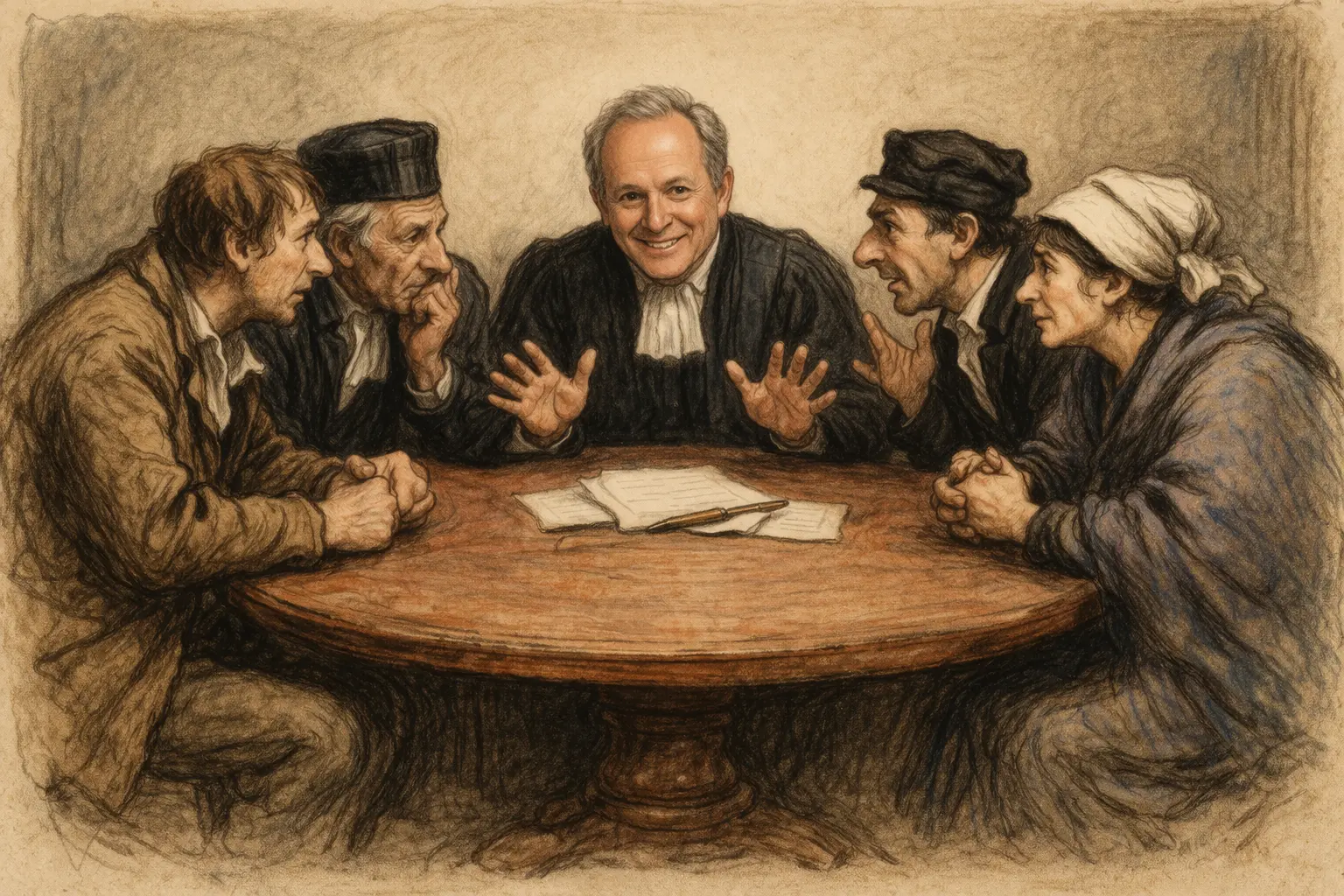
Arbitration: Waiver: 3 ½ Years Of Litigation, Complete With Removals/Remands From Federal Court, Discovery, And Trial Continuances, Supported Trial Court’s Conclusion That Arbitration Was Waived On The Cusp Of Another Continued Trial Date
Prejudice Did Occur Plus Bad Faith Inference That Late Motion To Compel Arbitration Was Sought For Strategic Purposes.
The Fourth District, Division Three has a rich body of case law on arbitration waiver as enunciated through a trio of cases: Burton v. Cruise, 190 Cal.App.4th 939 (2010); Adolph v. Coastal Auto Sales, Inc., 184 Cal.App.4th 1443 (2010); and Lewis v. Fletcher Jones Motor Cars, Inc., 205 Cal.App.4th 436 (2012). These cases have been applied often in subsequent cases involving waiver scenarios.
In Masimo Corp. v. Welch, Case No. G054803 (4th Dist., Div. 3 June 18, 2018) (unpublished; Goethals, J., author, concurred in by Bedsworth, A.P.J. and Ikola, J.), the 4/3 DCA had to confront a trial court’s denial of a motion to compel arbitration in an unusual situation—an employee was seeking to arbitrate against a corporate employer filing a lawsuit for misappropriation of trade secrets. The problem was the late juncture in which employee attempted to invoke arbitration rights. The circumstances showed the following: (1) employee litigated employer’s claims for over 3 ½ years in superior court; (2) employee did not list entitlement to arbitration as an affirmative defense in his answer to the complaint; (3) employee actively participated in discovery at the superior court level; (4) employee obtained numerous continuances of scheduled trial dates; (5) employee sought to delay things further through the bankruptcy of his subsequent employer, removing to federal court and obtaining yet another trial continuance before the matter was remanded to state court; and (6) employee filed his petition to compel arbitration three weeks before the newly scheduled trial date, gaining yet another continuance. The trial judge denied the petition to compel arbitration based upon waiver, with employee appealing the denial (which introduced more delay because the appeal stayed further trial court proceedings).
The 4/3 DCA affirmed. It found that the substantial evidence review standard applied because of conflicting inferences from the evidence, with prejudice shown by depriving employer of the expedited benefits of an arbitration given how it was staked at the last moment on the cusp of another trial. Aside from facts showing litigation in a manner inconsistent with arbitration, the result was supported by the conclusion substantial evidence showed that employee’s invocation was strategic and done in bad faith—to obtain another delay of the trial and then appeal to introduce further delay. Lest someone think that an appeal alone will support bad faith, the appellate panel was careful to observe that this was confined to facts showing that it was strategically used in abusive fashion: “We do not mean to suggest that every attorney who appreciates the strategic significance of an immediate right to appeal would be acting in bad faith by pursuing that strategy.” (Slip Op., p. 16.)
BLAWG BONUS MILEAGE—Marc’s colleague Mike Hensley successfully defended an appeal of an order denying a motion to compel arbitration earlier in Eagle Iron Erectors, Inc. v. W&W Steel Co., Case No. G053406 (4th Dist., Div. 3 Aug. 25, 2017) (unpublished; Fybel, J., author, concurred in by Bedsworth, A.P.J. and Moore, J.). There, defendant brought a motion to compel 7 ½ months after the initial complaint was filed, although bringing two demurrers, engaging in discovery (with the plaintiff having to bring motions to compel which were granted along with sanctions), and bringing the motion so as to postpone a looming trial. It did rely on the trio of 4/3 DCA decisions when it came to affirming the waiver determination.
Arbitration: Burden Of Proof: 4/3 DCA Affirms Trial Court’s Conclusion That Arbitration Agreement Did Not Exist In The Face Of Conflicting Evidence
Former Employee Did Not Sign Arbitration Clause, Denied Receiving Letter Where Employer Tried To Create A Ratification, And Subsequent Compensation Program Signature Did Not Evince An Agreement To Arbitrate.
The facts of this case were hotly contested. Former employee, after 13 years with employer, was presented with a handbook containing an arbitration agreement to sign. He refused and was put on suspension. Company sent him a FedEx letter, left on his doorstep, indicating that if he returned to work, he agreed to the handbook with the arbitration clause. Employee claimed he never received the letter. Employee returned to work and, 7 ½ years later, defendant implemented a new compensation program replete with arbitration, which employee signed—although resigning months later. Importantly, the compensation program only indicated employee would agree to arbitration to the extent he had signed such an agreement or would execute one later.
In light of this conflicting testimony, the trial court found no agreement to arbitrate, triggering an appeal by the losing ex-employer.
The 4/3 DCA, in Vitters v. Solesbee Auto Crafts, Inc., Case No. G054926 (4th Dist., Div. 3 June 18, 2018) (unpublished; Goethals, J., author, concurred in by Bedsworth, A.P.J. and Moore, J.), affirmed.
The problem for appellant, ex-employer was the substantial evidence rule. The key issue was whether employee agreed to the FedEx letter, but the presumption of acceptance and agreement was rebutted by employee—as the trial court determined. The subsequent compensation agreement did not result in a different result, given the language that employee had to agree or would agree in the future to arbitration—which employee claimed he did not do.
Arbitration: Nonsignatories; Section 1281.2: Brokers Were Third Parties Not Compelled To Arbitrate And Prospect Of Conflicting Rulings Further Justified Denial Of Petition To Compel Arbitration In Seller-Purchaser Dispute
Different Tracks For Different Parties, Creating Chaos, Was Good Back-Up Reasoning For Denial.
In Kim v. Kim, Case No. B283786 (2d Dist., Div. 8 June 13, 2018) (unpublished) (Rogan, J., Orange County Superior Court Judge sitting by assignment, concurred in by Rubin, Acting P.J. and Grimes, J.), defendants (all residential property seller affiliates) appealed a trial court’s denial of their petition to compel buyers to arbitrate all of their claims against both buyer affiliates and brokers/sales agents acting in a dual agency capacity. The problem was that the broker parties never agreed to arbitration under the CAR form agreement, and both buyers and brokers opposed the motion to compel arbitration.
The trial judge denied the petition, finding that the brokers were “third parties” not bound by the arbitration agreement and that any other result would lead to the possibility of inconsistent rulings under Code of Civil Procedure section 1281.2(c). The 2/8 DCA agreed.
First of all, the brokers were indeed “third parties” under section 1281.2(c) given the fact that the CAR form agreement mandated that the brokers had to consent to arbitration—and they did not. (Cronus Investments, Inc. v. Concierge Services, 35 Cal.4th 376, 393 (2005).)
Next, the decision to deny arbitration and allow the litigation to proceed was warranted. The problem here is that permitting the arbitration and litigation to proceed simultaneously could have resulted in these representative conflicting adjudications: (1) a jury could find that brokers negligently repeated seller’s misrepresentations about the property while an arbitrator could find that sellers did not make such misrepresentations; and (2) a jury could have found that brokers worked with sellers to fraudulently misrepresent the value of the property but an arbitrator could find that sellers had no such involvement. Given the possibility of conflicting rulings based on these “different tracks,” no error was committed in denying the petition to compel arbitration, coupled with the fact that discovery had been conducted in the litigation such that it was not efficient to proceed to arbitration on this additional basis.
BLAWG OBSERVATION—Orange County Superior Court Judge James E. Rogan, sitting by assignment, has quite a pedigree. He was a former California and federal legislator and was a U.S. House of Representative manager in the impeachment trial of then President Bill Clinton, all before being appointed to the bench.
Arbitration: Choice of Law; Standard of Review: Arbitrator’s Award Of $183,000 In Allocated Fees To One Successful Defendant In Joint Defense Arrangement And Trial Court’s $21,000 In Post-Arbitration Fees To All Defendants Were Proper
Losing Plaintiff Claimed Arbitration Award Was “Manifest Disregard Of Law,” But This Was A Federal Standard Rather Than The More Limited State Standard Applicable To Review Of Arbitration Awards.
HUB International Ins. Services v. Morales, Case No. E067095 (4th Dist., Div. 2 June 14, 2018) (unpublished) was an imbroglio involving non-interference, non-solicitation, confidential disclosure, and non-recruit provisions in certain documents between employees and an insurance company, triggered once certain employees departed and went to work for a rival insurance company. The pertinent agreements had arbitration clauses under California law, with the signatories waiving appeal rights. The real dispute was between the insurance companies, but all parties stipulated to arbitration even though some parties had agreed to contractually arbitrate previously.
The arbitrator found against plaintiff and in favor of defendants. The thrust of the arbitrator’s decision was that a liquidated damages clause for breach of the pertinent agreements was unenforceable given that plaintiff would not introduce lost profits evidence so to allow the arbitrator to gauge whether the liquidated damages were reasonable in relation to actual damages. The arbitrator then ordered that defendant Morales recover prevailing party fees of $183,000, with the trial judge affirming the arbitration award and then further ordering that all defendants obtain post-arbitration fees of $21,000.
Plaintiff challenged the arbitration award on the merits and on the $183,000 fee award, but none of those challenges resonated with the 4/2 DCA.
Although the arbitrator actually did allocate out the fees attributable to arbitration efforts for the rival insurance company, plaintiff’s challenge that the arbitrator made a “manifest disregard of law” was incorrect. This was a federal criterion challenge under the FAA, not a state challenge which does not generally allow challenges to the merits of an award—especially given that the signatories to the arbitration agreement and arbitration stipulation agreed California law would apply. (Siegel v. Prudential Ins. Co., 67 Cal.App.4th 1270, 1280, 1290 (1998).) Also, the parties did waive the right to appeal, but the appellate court construed this as waiving appellate rights except on the limited grounds applicable under the California appellate restrictions relating to arbitration awards. (Cable Connection, Inc. v. DIRECTV, Inc., 44 Cal.4th 1334, 1358 (2000).)
Book Reviews: Jeffrey Rosen’s American Prophet: Louis D. Brandeis
Marc's Review of Jeffrey Rosen's American Prophet: Louis D. Brandeis, Has Been Published in California Litigation.
With the permission of California Litigation, the journal of the litigation section of the California Lawyers Association, Marc's review of Jeffrey Rosen's book about Justice Louis D. Brandeis and his thought is made available here.
Arbitration: Construction Of Agreement; Delegation; Scope: Plaintiff Uber/Lyft Driver’s Suit Relating To Uber Use Of Fake Lyft Accounts Was Not Within Scope Of Arbitration Agreements With Uber
Appellate Court Accepted Delegation Of Arbitrability Gateway Determination To Arbitrator, But Found Uber’s Arbitrability Assertion Was “Wholly Groundless” Because Dispute Was Patently Beyond The Scope of Parties’ Arbitration Agreement.
Smythe v. Uber Technologies, Inc., Case No. A149891 (1st Dist., Div. 3 June 8, 2018) (published) (Siggins, J., concurred in by McGuiness, Acting P.J. (retired justice sitting by assignment) and Pollak, J.) was an interesting case involving whether a controversy raised by a driver for both Uber and Lyft fell within the scope of an arbitration clause between driver and Uber. Both the lower and appellate courts decided it did not.
Plaintiff driver, on both of himself and a putative class of Lyft drivers, sued Uber for a practice of directing its drivers and others to create/use fake Lyft accounts to request rides such that Lyft drivers were sent on wild good chases to pick up nonexistent passengers—all designed to discourage drivers from driving Lyft and causing Lyft customers to divert their patronage to Uber. In response, Uber moved to compel arbitration and stay the class actions based on two agreements plaintiff signed with Uber having arbitration clauses. Those provisions required arbitration with respect “to any dispute arising out of or related to this Agreement or termination of the Agreement,” expressly mentioning wage/hour, trade secrets, unfair competition, compensation, expense reimbursement, termination, harassment and claims arising under various trade secret/discrimination/wage hour statutes. The agreements also included a delegation clause specifying that disputes over arbitrability were to be decided by the arbitrator and not a court/judge.
The lower court found driver’s complaint allegations were beyond the scope of the arbitration agreement and that the delegation provision was unenforceable in the context of driver’s advanced claims.
The 1/3 DCA agreed.
It accepted Uber’s premise that the arbitrator decided the gateway arbitrability issue, but decided an important exception applied. Relying upon Qualcomm Inc. v. Nokia Corp., 466 F.3d 1366, 1371 (Fed. Cir. 2006) which was found consistent with California law on the particular issue, the trial court did not have to defer to the arbitrator where the assertion of arbitrability is “wholly groundless,” but could deny the motion to compel arbitration and the request to stay the action. That exception carried the day in Smythe.
Like the lower court, the appellate panel determined that driver Smythe brought his action in his capacity as a driver for Lyft, not Uber, and that the complaint allegations fell outside the ambit of the arbitration clause between Smythe and Uber. “Indeed, the same allegations could just as well be pursued by a Lyft driver who does not drive for Uber.” (Slip Op., at p.5.)