Health Care: Provider Complied With Arbitration Disclosure Requirements In Health & Safety Code Section 1363.1
Necessary Disclosures Were Found In The Group Subscriber Agreement And Enrollment Form.
Dougherty v. U.S. Behavioral Health Plan, 101 Cal. App. 5th 682 (4/2 4/24/24) (Codrington, Miller, Fields) involves the application of Health & Safety Code § 1363.1 to determine whether a dispute had to be arbitrated with a health care provider. While reading the legal analysis, it is very easy to skip by the human tragedy in the case.
Christine Dougherty enrolled herself and her son Ryan in a health care plan. Ryan had a severe addiction problem. He admitted himself to a treatment facility which the plan initially agreed to cover, but denied coverage three days later on the ground that Ryan could be treated at home. Shortly after discharge, Ryan fatally overdosed.
Defendant USB moved to compel arbitration. The trial court denied the motion on the ground that USB had failed to comply with § 1363.1(d), which requires that, "In any contract or enrollment agreement for a health care service plan, the disclosure required by this section shall be displayed immediately before the signature line provided for the representative of the group contracting with a health care service plan and immediately before the signature line provided for the individual enrolling in the health care service plan.”
USB's argument that the issue of arbitrability had been delegated to the arbitrator had been forfeited. However, the Court of Appeal determined that the necessary disclosures were included in the Group Subscriber Agreement and enrollment form. USB's argument that 1363.1 was preempted by federal law did not need to be addressed.
Delegation: Delegation Of Arbitrability To Arbitrator Fails When Delegation Is Not Clear And Unmistakable
Reference To The URL For AAA Rules Is Not Clear And Unmistakable Evidence Of Delegation Of Arbitrability.
In an employment-related disputed, employee Mondragon argued that an arbitration provision that did not cover PAGA claims to the extent possible excluded all PAGA claims from arbitration, whereas the employer argued that it was only intended to exclude claims brought by the employee as a representative of other workers. Also, the employer argued that the issue of arbitrability had been delegated by reference to AAA rules to the arbitrator to decide. The employee's position prevailed in the trial court as well as the Court of Appeal. Mondragon v. Sunrun Inc., 101 Cal. App. 5th 592 (2/7 4/23/24) (Segal, Feuer, Martinez).
Justice Segal explained, "We conclude that, by signing an arbitration agreement that (1) merely referred to the rules of the American Arbitration Association; (2) included a carve-out that arguably covered the dispute; and (3) included a severability clause stating a court may not enforce certain provisions, Mondragon, an unsophisticated party, did not delegate arbitrability decisions to the arbitrator. We also conclude the language of the arbitration agreement did not require Mondragon to arbitrate his individual PAGA claims."
Waiver: Waiting Too Long To Move To Compel Arbitration While Propounding Discovery Leads To Waiver
Lawsuit Was Filed In March 2015 And Motion To Compel Arbitration Was Filed In March 2023.
Plaintiff Joseph Semprini sued his employer Wedbush in March 2015, alleging 11 causes of action unique to him, and 7 putative class action claims for wage and hour violations. He added a representative PAGA claim in April 2015. For several years, the class and PAGA claims were litigated, the parties having stipulated that the 11 personal causes of action would be arbitrated. In 2022, however, two events occurred to give the employer an argument that the litigated claims should be arbitrated, notwithstanding the earlier stipulation.
First, Viking River Cruises was decided in June 2022, holding that an employer could enforce an agreement to arbitrate PAGA claims. Second, in the wake of Viking River Cruises, the employer was able to get a number of employees to execute arbitration agreements. Perhaps this could have opened up an opportunity to compel arbitration of the remaining claims. However, the employer did not move to compel until March 2023, and meanwhile conducted discovery. If the employer might have resuscitated a right to arbitrate, that right was waived and died because of the employer's delay and continuing litigation conduct.
The order denying Wedbush's motion to compel arbitration was affirmed. Semprini v. Wedbush Securities, Inc., G062662 (4/3 4/18/24) (Goethals, Sanchez, Delaney).
This is an example of the "you snooze you lose" adage.
Employment, Existence Of Arbitration Agreement: Employer Failed To Show Arbitration Agreement Existed During Second Employment Stint
Termination Of Employment Stint #1 Terminated Arbitration Agreement.
Plaintiff Jasmin Vazquez sued SaniSure, Inc. for Labor Code violations. SaniSure moved to compel arbitration based on the existence of a broad arbitration clause in Vazquez's employment agreement. SaniSure failed in the trial court and in the Court of Appeal. Vazquez v. SaniSure, Inc. (2/6 4/3/24) (Baltodano, Yegan, Cody).
SaniSure was unsuccessful because the arbitration clause it relied upon only existed in a first stint of Vazquez's employment from July 2019 to May 2021. However, she terminated her employment, and the arbitration agreement terminated. The employer could not show that an agreement to arbitrate existed during her second stint of employment, and the court was not going to imply the existence of the agreement from the first employment stint.
COMMENT: The employer could have avoided its predicament by the execution of another arbitration agreement during employment stint #2.
Vestigial Jurisdiction: Once Trial Court Granted Motion To Compel Arbitration, It Lacked Jurisdiction To Dismiss
What Vestigial Jurisdiction Does The Court Retain After Granting A Motion To Compel Arbitration?
Plaintiff Dee Lew-Williams, the successor in interest to her late physician husband, sued defendants for embezzlement. Defendants successfully moved to compel arbitration. But Lew-Williams, claiming lack of funds, was unable to prosecute the arbitration, and so defendants moved the trial court successfully to dismiss the case for lack of diligent prosecution. Lew-Williams appealed the dismissal. Lew-Williams v. Petrosian, B330387 (2/7 4/2/24) (Feuer, Segal, Raphael).
Reversed. "If a party fails to diligently prosecute an arbitration, the appropriate remedy is for the opposing party to seek relief in the arbitration proceeding (and, if necessary, the opposing party may need to initiate the arbitration for this purpose)."
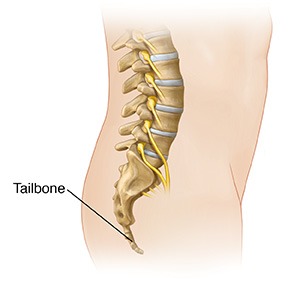
Bonus: Coccycx (Tailbone): Vestigial.
Settlement Agreements: An Agreement Is Enforced Under CCP 664.6 Despite $250K Liquidated Damages Clause
Liquidated Damages Of $250K Were Reasonable In Proportion To $2.2M Settlement.
After an all-day tele-mediation the parties executed a term sheet providing that defendant/cross-complainant would pay $1.6M to plaintiff, and cross-defendant would pay $600K. Defendant/cross-complainant had second thoughts the next day and reneged on payment. Cross-defendant paid $600K. And plaintiff successfully enforced the settlement in the trial court under CCP § 664.6. Defendant appealed — unsuccessfully. BTHHM Berkeley, LLC v. Stewart Johnson v. Holda Novelo, A166242 (1/4 3/28/24) (Goldman, Brown, Streeter).
The panel rejected arguments that the settlement agreement lacked enough specificity. Although it contemplated future events, such as execution of a stipulation, releases, and assistance if necessary by the mediator, those aspects did not negate the sufficiency of the agreement, which by its terms was "admissible and enforceable in court" and "a good faith settlement."
Sometimes it is argued that the liquidated damages clause in an agreement amounts to an unreasonable forfeiture and is not enforceable. The argument did not fly here. Civil Code § 1671(b) creates a presumption that liquidated damages are valid unless the party challenging shows the damages are unreasonable. With a non-consumer contract and a $2.2M settlement, Justice Goldman explained that the liquidated damages were not unreasonable.
However, the panel did remove some prejudgment interest. Prejudgment interest is an element of damages, and the settlement agreement set the damages. The panel would not create a new damage term that the parties did not agree to.
COMMENT: What probably weighed in favor of enforcing the settlement? The trial judge found that defendant's declaration seeking to avoid enforcement was "self-serving." The parties were sophisticated, this was a commercial transaction, and they received legal advice. The settlement term sheet included the following language: "Parties agree the Agreement is admissible and enforceable in court pursuant to CCP § 664.6. The parties agree that this is a good faith settlement between adverse parties. . . ." And while defendant did not pay $1.6M toward the settlement, another party did pay its share of $600K.