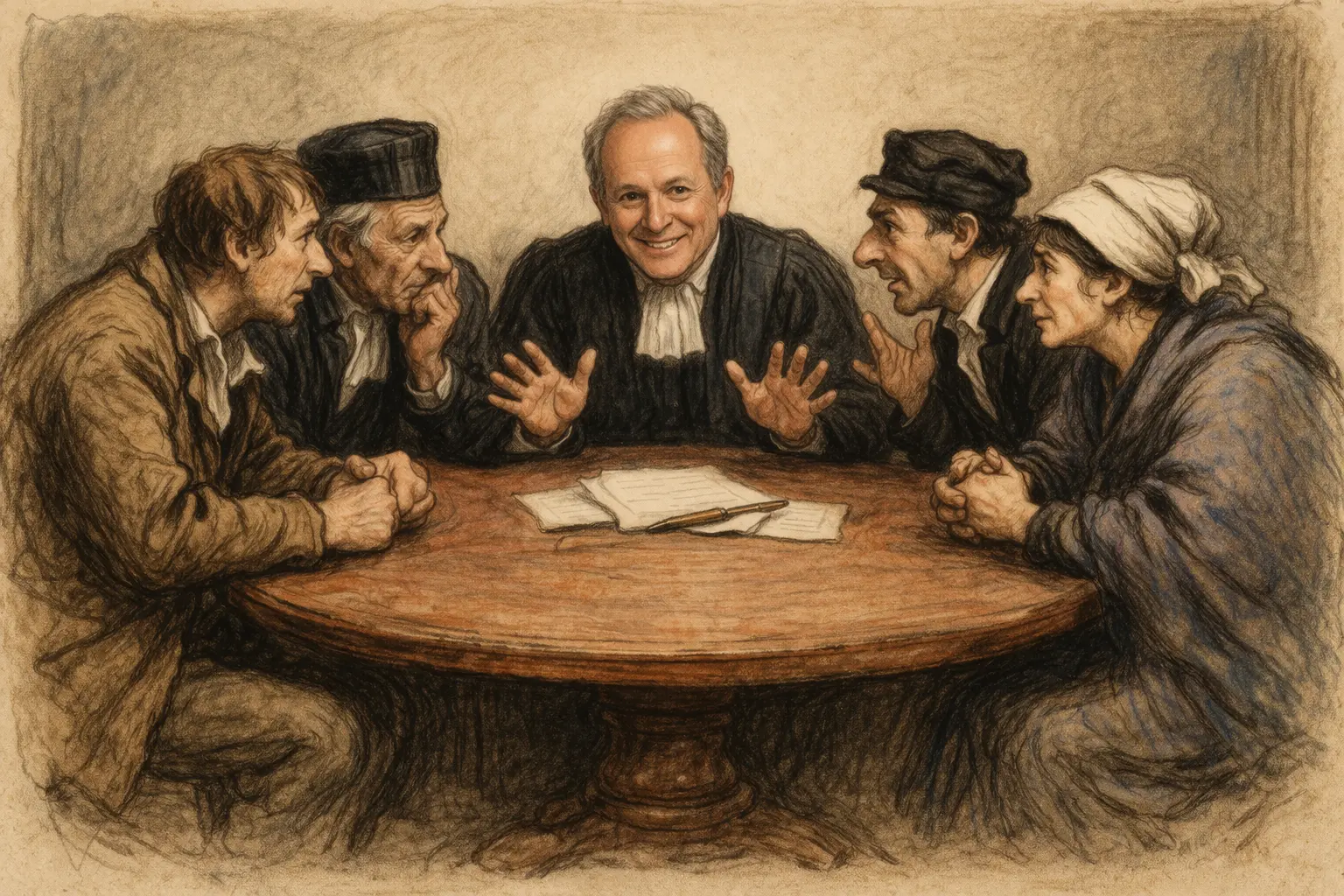
Book Review: Citizen Justice: The Environmental Legacy Of William O. Douglas
Public Advocate And Conservation Champion.
My book review of the Hon. M. Margaret McKeown's The Environmental Legacy of William O. Douglas Public Advocate and Environmental Champion appears in the April 2024 issue of Los Angeles Lawyer. You can also read the review here: Download Citizen Justice.
Arbitration, FAA, Transportation Workers: SCOTUS Holds Transportation Worker Exemption Applies To What Workers Do, Not Who They Work For
A 9-0 Opinion Authored By Justice John Roberts.

Wonder Bread Store, B-80, Rock Springs, Wyoming. Photographer: John Margolies. 2004. Library of Congress. No known restrictions.
The Supreme Court, in a unanimous decision, holds: "A transportation worker need not work in the transportation industry to fall within the exemption from the FAA provided by §1 of the Act." Bissonnette v. LePage Bakeries, 23-51_6647 (Sup. Ct. 4/12/24) (Roberts, J.).
Section 1 of the FAA exempts transportation workers from mandatory arbitration. The issue in Bissonnette was whether transportation workers are workers who work for employers in the transportation industry, as the District Court majority and the Second Circuit had ruled, or whether transportation workers are defined by what they do. Justice Roberts explains that transportation workers are defined by what they do.
We have written about the FAA exemption for transportation workers before. See our sidebar category Transportation Workers.
BONUS: Baby Boomers may remember advertisements for Wonder Bread, the white bread that made you grow 12 ways. Wonder Bread is one of the "flagship products" of defendant/respondent Flower Foods, Inc., "which it promotes with a 95-foot-tall hot air balloon and a parade float called The Wondership."
Arbitration, Deadlines, FAA Preemption: California: Friend Or Foe Of Arbitration?
Our Article In The Daily Journal Examines Hohenshelt v. The Superior Court.
Our article in the April 10, 2024 Daily Journal begins: "The majority and minority opinions in a recent California appellate decision highlight the conflict between California and federal attitudes about arbitration. The case is Dana Hohenshelt v. The The Superior Court of Los Angeles County; Golden State Foods Corp. (real party in interest) (2024) 99 Cal.App.5th 1319. The majority opinion, authored by Justice Maria Stratton, claims to further the objectives of arbitration. Sharply dissenting, Justice John Shepard Wiley Jr. writes, “Judged by actions, California law over the last few decades . . . has not been a friend of arbitration.”
The narrow issue raised by the case concerns the application of Cal. Code of Civ. Proc. § 1281.98. This is the provision requiring payment within 30 days of arbitration fees and costs by drafters of arbitration agreements, or else the right to arbitrate is waived, and consumers and employers can then choose to arbitrate or litigate. The majority opinion joins the many California cases that have strictly interpreted the statute, leading to waiver of the right to arbitrate by employers and corporations that miss the due date for payment. The majority opinion claims that the prompt payment requirement furthers the purpose of arbitration, and prevents the abuse of initiating arbitration and leaving it in limbo.
Justice Wiley, dissenting, lays out the argument that this statute unfairly burdens arbitration agreements more than other contracts. As a result, he concludes that it is preempted by the Federal Arbitration Act. Because preemption relies on the Supremacy Clause, it presents an issue of constitutional significance. Justice Wiley suggests that once again the US Supreme Court will eventually send a message that California law concerning arbitration is preempted by the FAA.
Arbitration, Public Injunctive Relief: Predispute Arbitration Provision Cannot Make Claimant Waive Right To Public Injunctive Relief
McGill Lives.
California's McGill case, about which we have posted before1, holds a predispute arbitration provision waiving a plaintiff’s right to seek public injunctive relief is “contrary to California public policy and is thus unenforceable under California law.” The McGill holding is enforced again in Ramsey v. Comcast Cable Communications, LLC, H049949 (6th Dist. pub. 1/29/24) (Greenwood, Grover, Lie).
Charles Ramsey sued Comcast Cable Communications alleging various violations of consumer protections. He alleged that Comcast misleads the public with information about its promotional prices. Apparently Ramsey was able to contact Comcast yearly when his service contract was about to expire, and renegotiate the contract, getting pretty much the same promotional deal. The art of the deal!
Anyway, Comcast petitioned unsuccessfully to compel arbitration. Ramsey argued that he sought public injunctive relief, and could not be bound to a predispute arbitration agreement requiring a waiver of such relief. Comcast argued that the injunctive relief Ramsey requested would only benefit a discrete group of existing subscribers rather than the public. The trial court disagreed with Comcast and so did the Court of Appeal.
The opinion explains that the relief requested by Ramsey could benefit potential subscribers to the service if it meant that they would receive more accurate information. And: "An injunction that benefits both subscribers and potential subscribers is a public injunction."
1 We have a sidebar category for Arbitration: Public Injunctive Relief. You can click on the link to find other cases mentioning McGill.
Arbitration, Civil Rights: “Predispute” Arbitration Agreement Relates To Date Of Dispute, Not Injury
The Date Of A Dispute And An Injury May Not Be The Same.
The Ending Forced Arbitration of Sexual Assault and Sexual Harassment Act invalidates predispute arbitration agreements in certain circumstances. In Kader v. Southern California Medical Center, Inc., B326830 (2/5 1/29/24) (Moor, Rubin, Kim), the key issue was whether the arbitration agreement executed by the alleged victim, Omar Kader, was a "predispute" arbitration agreement. Mr. Kader alleged a number instances of sexual abuse by a superior, starting before the arbitration agreement with his employer had even been inked. In moving to compel arbitration, defendants argued that the alleged sexual abuse predated the arbitration agreement and the effective date of the Act, and therefore, the arbitration agreement was not "predispute".
Justice Carl H. Moor, who penned the court's opinion, explained that in dictionary usage, a dispute is not the same as an injury. "A dispute arises when one party asserts a right, claim, or demand, and the other side expresses disagreement or takes an adversarial posture." Determining the date of the dispute will depend on the facts.
Under the circumstances here, the date of the actual "dispute" (as opposed to the earlier date of injury) arose late enough so that the arbitration agreement was not "predispute." Furthermore, the dispute arose after the the effective date in May 2022 of the Act.
The trial court's order denying the motion to compel arbitration was affirmed.
Arbitration, Deadlines: Once Again, Requirement In Employment And Consumer Arbitration To Pay Fees In 30 Days Is Strictly Interpreted
California Courts Have Posted Plenty Of Warnings About The 30-Day Deadline To Pay The Arbitration Fees Or Lose The Right To Arbitrate.
And we have posted plenty of times about those warnings about this particular deadline. The latest warning that the 30-day deadline found in Cal. Code of Civ. Proc. § 1281.97 will be strictly interpreted is to be found in an employment law case, Suarez v. Superior Court of San Diego; Real Party in Interest, Rudolph & Sletten, Inc., D082429 (4/2 1/24/24) (Dato, O'Rourke, Do).
JAMS issued an e-mail invoice on December 2, 2022 marked "due upon receipt." It was undisputed that the employer did not pay its share before January 4, 2023, more than 30 days after the amount was due. The employer argued that its time to pay was extended for two reasons. First, January 1 was a Sunday and January 2 was a holiday. Second, the employer argued it should get two more days on top of the holiday, based on § 1010.6, pertaining to electronic filing of court documents. However, neither argument had traction, because the 30-day deadline provision for paying arbitration fees does not relate to motions or to documents filed with the court.
COMMENT: It is surprising that parties miss the strict deadline by only a few days in reported cases. The lesson here, for employers and providers of consumer products who want to arbitrate, is do not wait till the last moment to pay fees.
At the end of the opinion, the court lets drop, "[W]aiver and material breach do not automatically remove a matter from arbitration. Instead, the employee is given the option of resolving the stagnant dispute in an action before the court." Evidently the Court of Appeal is concerned that the strict deadline, if interpreted to impose an extra burden on arbitration, could result in an FAA preemption argument.