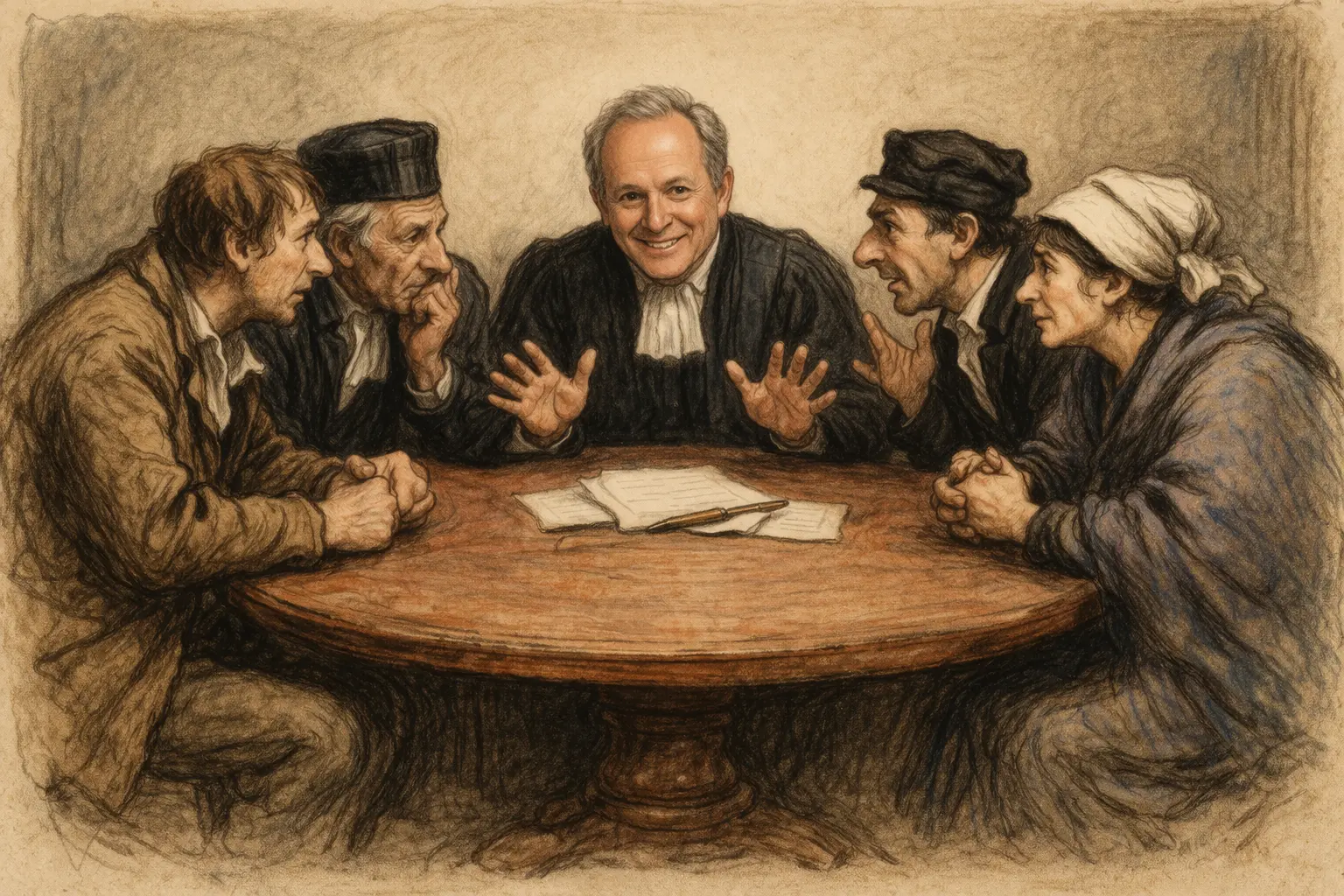
Pending Case, Waiver: Ninth Circuit Panel Denies Petition For Rehearing And En Banc In Hodges v. Comcast
Panel Denies Motion For Rehearing And Request For En Banc.
On September 15, 2021, we posted about Hodges v. Comcast, No. 19-16483 (9th Cir. 9/10/21) (Collins, VanDyke; Berzon, dsst.) In that case, the court held that non-waivable public injunctive relief (i.e., relief that falls under the McGill rule), must be forward looking and benefit the general public. Judge Berzon dissented, believing that relief that would require Comcast to rewrite its contract with its customers would be forward looking and benefit the public, given the size of Comcast's customer base. On December 23, 2021, the panel denied a petition for a rehearing, and denied on behalf of the court a petition for a rehearing en banc.
Arbitration, FAA, Transportation: 9th Circuit Agrees Domino’s Drivers Transporting Pizza Ingredients To Franchisees Intrastate Are Engaged In Interstate Commerce
Engaged In Interstate Commerce, Domino's Drivers Delivering Pizza Ingredients Intrastate Are Exempt From Requirements of Federal Arbitration Act. 9 U.S.C § 1.
How Domino's Makes Its Pizza ↑

Downtown LA Pizza. Carol Highsmith, photographer. 2012. Library of Congress. ↑
Jon Stewart Deep Dish Pizza Rant. ↓
In an opinion penned by Judge Hurwitz, the 9th Circuit affirmed a district court decision denying Domino 's motion to compel arbitration in a labor law lawsuit brought by drivers who delivered pizza ingredients from a central distribution center to Domino's franchisees. Carmona v. Domino's Pizza, No. 21-55009 (9th Cir. 12/23/21) (Hurwitz, McLane, Parker).
The Federal Arbitration Act exempts transportation workers engaged in interstate commerce from the requirements of the FAA. The drivers working for Domino's work in-state, but when they deliver pizza ingredients to Domino's franchisees, they are acting as workers engaged in a “single, unbroken stream of interstate commerce” that renders interstate commerce a “central part” of their job description. Judge Hurwitz relied on a similar 9th Circuit case involving Amazon delivery drivers, Rittmann v. Amazon.com, Inc., 971 F.3d 904 (9th Cir. 2020). See our earlier 8/31/20 post on Rittmann.
Judge Hurwitz writes that there are distinctions between the Amazon and Domino's Pizza cases: "The customers to whom the Amazon drivers delivered the interstate goods in Rittmann initiated the purchases online with Amazon . . . while the Domino’s franchisees order the goods from the Supply Center in California only after Domino’s has already purchased them. But this is a distinction without a difference." In the end, the drivers are still participating in a single, unbroken stream of interstate commerce.
Arbitration, Enforceability, Employment: Ninth Circuit Holds Arbitration Agreement Enforceable Against Farm Worker Because No Economic Duress
Just Following The Law, Or Gaslighting?
Farmworker Martinez-Gonzalez, on behalf of himself and other employees, brought a wage and hour lawsuit against a farm labor contractor and a grower. The district court held that defendants could not enforce an arbitration agreement, because the employee had signed under economic duress or undue influence. A Ninth Circuit panel reversed, holding that economic duress or undue influence did not exist, because the employer did not commit a "wrongful act" and because the employee was not unusually susceptible. Judge Rawlinson dissented, arguing the district court provided detailed factual findings on which its decision was based, and the majority failed to give proper deference to the district court's findings. Martinez-Gonzalez v. Elkhorn Packing Co., LLC, et al, No. 19-17311 (9th Cir. 11/3/21) (Bumatay, Siler; Rawlinson (dissent)).
The majority and dissenting opinions make for interesting reading. Judge Bumatay, author of the majority opinion, wrote: "The dissent disagrees largely based on Martinez-Gonzalez’s socioeconomic background." He also insisted it was the court's duty to follow the law, not its sympathies. Judge Rawlinson retorted, "The majority’s suggestion that 'facts don’t matter' to me or to the district court . . . is nothing short of gaslighting." And she includes a definition of gaslighting taken from Wikipedia: "The term “[g]aslighting is . . . used informally to describe someone who persistently puts forth [a] false narrative” in an effort to cause “another person to doubt [her] own perceptions. . . .”
The district court did make detailed factual findings, noting that the employee was transported in a twelve-hour bus trip from Mexico, that he signed the arbitration agreement in a parking lot of the hotel where the employer was putting him up, that no explanation was provided to him, and that he had a reasonable belief that if he did not sign, he would not be able to find another job. The majority points out that the facts do not amount to a crime or a tort, and fall short of other cases in which contracts have been rescinded because of economic duress or undue influence. The dissent points out that a tort or a crime is not required to find undue influence or economic duress, that the district court judge made detailed findings, and that the court should have deferred to the findings and to reasonable inferences from the findings.
COMMENT: The case is interesting because the facts occupy a liminal space: they do not amount to a tort or a crime, and yet as the majority artfully puts it, the circumstances for signing the arbitration agreement were "not ideal." So the question presented is: what facts, falling short of crime or tort, will constitute a wrongful act?
The case is another example of a decision involving a pre-dispute arbitration provision in which the judges' respective views line up with the party of the President who appointed them: Bumatay (Trump), Siler (George H. W. Bush), Rawlinson (Clinton).
The case also provides an example of that much repeated proposition that arbitration is voluntary and consistent with freedom of contract — a proposition necessary to uphold the enforceability of arbitration agreements, while at the same time serving as a legal fiction.
Finally, it is worth noting that the enforceability of the arbitration provision in this case depends on whether there is undue influence or economic duress. See Cal. Civ. Code § 1689(b)(1). This is different from unconscionability, the more common defense to contract enforceability. In California, unconscionability has two prongs: procedural unconscionability and substantive unconscionability. But rescinding a contract based on economic duress or undue influence does not require substantive unconscionability.

"Visalia (vicinity), Tulare County, California. The Farm Security Administration. Miners's cooperative farm. Ten families have been established on the old ranch of 500 acres, which they operate as a farm unit, raising cotton alfalfa and dairy products for cash crops." Dorothea Lange, photographer. November 1938. Library of Congress.
Arbitration, Unconscionability, Severability: CCA 4/3 Agrees Arbitration Agreement As Condition Of Employment With Limitations On Discovery And Statute Of Limitations Is Unconscionable
De Leon v. Pinnacle Property Management Services, LLC, G059801 (4/3 ord. to publish 12/8/21) (Marks, Fybel, Goethals).
This case applies established principles to affirm the trial court's order denying employer's motion to compel arbitration. The trial court found the arbitration agreement procedurally and substantively unconscionable. Procedurally unconscionable, because it was a take-it-or leave it precondition to employment, making it a contract of adhesion. Substantively unconscionable because it included a one year statute of limitation, and discovery limitations. Because there were two substantive flaws, the agreement was "permeated" with unconscionability, and therefore severability was not proper.
COMMENTS. The case is of interest, because statutes of limitation and limits on discovery do not necessarily make an arbitration agreement substantively unconscionable. Therefore, the case distinguishes other cases that address limitations on discovery and statutes of limitation. Shortened statutes of limitation that limit the ability of an employee to assert statutory rights can be a problem. As to discovery limitations, the court notes that limitations that appear neutral on their face may actually benefit an employer who has within its possession the information necessary to defend itself. The California Labor Commission requested that the opinion be certified for publication.
Also, we note that the contract was entered into in 2016. But if it had been entered into after January 1, 2020, the fact that arbitration was made a condition of employment would have raised an issue under AB 51. See our discussion of Chamber of Commerce v. Bonta.
Arbitration, Existence Of Agreement: CCA 2/7 Holds Employer Failed To Carry Burden Of Proof Agreement To Arbitrate Existed
After Employee Questioned The Agreement To Arbitrate, Burden Of Proof Shifted To Employer.
Hope Gamboa sued Northeast Community Clinic for employment-related claims. The employer moved to arbitrate. The trial court denied the motion. Affirmed. No agreement to arbitrate existed. Gamboa v. Northeast Community Clinic, No. 394833 (2/7 11/30/21) (Ibarra, Perluss, Feuer).
Why couldn't the employer prove an agreement to arbitrate existed? The employer provided a signed contract and a statement by the HR manager that the employee had signed the agreement. This shifted the burden of proof to the employee, who testified she didn't remember the agreement, and wouldn't have signed it if she had known what it was. This amounted to a denial of the existence of the agreement. Unfortunately for the employer, the declaration it provided did not provide foundation that the declarant had personal knowledge that the employee signed.
Reviews: Your Blogger Had Two Articles Recently Published In The Daily Journal
The articles are:
Outsourcing the violation of constitutional rights to private parties, Sept. 8, 2021.
NOTE: While I have provided links, they tend to be of limited benefit, because the Daily Journal is behind a paywall.